Explainer
Outdoor vs Indoor Cold Plunge: What Actually Changes
Specifications verified 2026-07-26
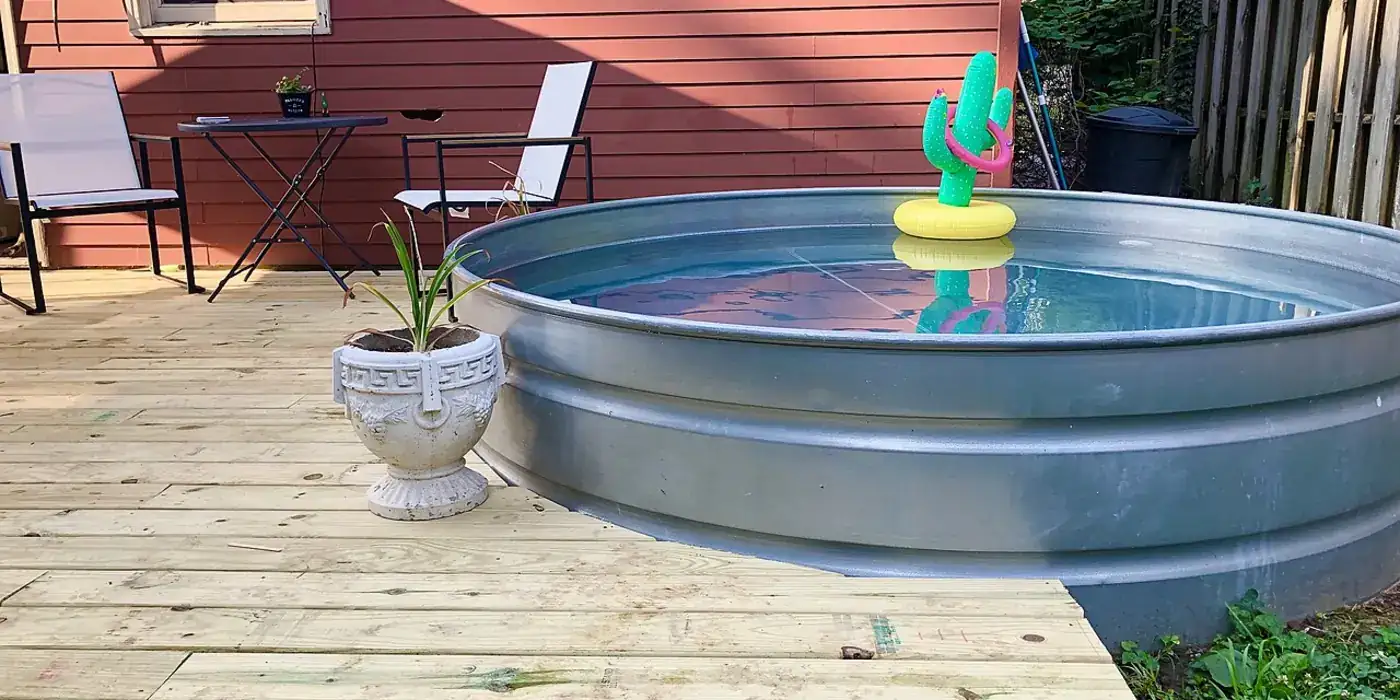
Where you put a cold plunge changes almost every other decision: how hard the chiller works, what the shell needs to survive, how often you clean it, and in cold climates whether you need refrigeration at all. It is worth settling placement before you settle on a product.
The manufacturers themselves acknowledge this more than you might expect. Sun Home states outright that achievable minimum and maximum temperatures on its Horizontal tub are highly dependent on ambient temperature — an unusually candid admission that the same tub performs differently in different places.
| Product | Price | Temp range | Capacity | Cooling | Warranty | Link |
|---|---|---|---|---|---|---|
| Alaskan Cold Plunge TubRedwood Outdoors | $2,999 | Not published | 130 gal | Ice only | 1-year limited | Check price |
| Alaskan All-In-One Cold Plunge KitRedwood Outdoors | $6,999 | 37–104°F | 104 gal | Chiller included1.5 HP (Balboa Clim8zone Deluxe dual chiller/heater) | 1-year limited on tub and chiller | Check price |
| Sun Home Cold Plunge – HorizontalSun Home Saunas | $3,999listed down from $4,099 | 32–107°F | Not published | Chiller included1 HP | 1-year limited | Check price |
| Ice Barrel 500Ice Barrel | $1,749.99 | Not published | 94 gal | Chiller optional | Limited lifetime warranty | Check price |
| Sun Home Cold Plunge ProSun Home Saunas | $13,999listed down from $14,599 | 32°F min | 150 gal | Chiller included1 HP | 1 year standard; 3-year and 5-year extensions available | Check price |
Units referenced for outdoor and indoor placement, verified 2026-07-26.
Alaskan Cold Plunge Tub
Redwood Outdoors
- Price
- $2,999
- Temp range
- Not published
- Capacity
- 130 gal
- Cooling
- Ice only
- Warranty
- 1-year limited
Alaskan All-In-One Cold Plunge Kit
Redwood Outdoors
- Price
- $6,999
- Temp range
- 37–104°F
- Capacity
- 104 gal
- Cooling
- Chiller included
- Warranty
- 1-year limited on tub and chiller
Sun Home Cold Plunge – Horizontal
Sun Home Saunas
- Price
- $3,999
- Temp range
- 32–107°F
- Capacity
- Not published
- Cooling
- Chiller included
- Warranty
- 1-year limited
Ice Barrel 500
Ice Barrel
- Price
- $1,749.99
- Temp range
- Not published
- Capacity
- 94 gal
- Cooling
- Chiller optional
- Warranty
- Limited lifetime warranty
Sun Home Cold Plunge Pro
Sun Home Saunas
- Price
- $13,999
- Temp range
- 32°F min
- Capacity
- 150 gal
- Cooling
- Chiller included
- Warranty
- 1 year standard; 3-year and 5-year extensions available
Prices and specifications were read from each manufacturer’s own product page on the date shown in each entry. Blank fields mean the manufacturer does not publish that figure — we do not estimate.
Outdoors, ambient temperature is doing half the work
In a cold climate, an outdoor tub is partly self-chilling for months of the year. This is the strongest argument for a well-insulated, non-electric vessel like the Redwood Alaskan Cold Plunge Tub ($2,999, Canadian Thermowood, 130 gallons, no power requirement at all) or an Ice Barrel run on ice. You are not paying to fight the environment; you are working with it.
In a hot climate the same logic runs backwards. A chiller in a 100°F garden works substantially harder than the same chiller indoors, and the manufacturer's stated minimum temperature becomes optimistic. This is exactly why Sun Home caveats its own figures, and why insulation and a fitted lid matter more outdoors than in.
Materials that survive outside
Redwood's outdoor tubs use Canadian Thermowood — thermally modified hemlock — over a hard plastic or moulded acrylic liner, which is a construction chosen specifically for weather exposure. Sun Home applies a LineX exterior coating to both its Horizontal tub and its 316-stainless Cold Plunge Pro, and 316-grade stainless is the marine-oriented alloy for a reason.
Ice Barrel supplies a UV and water-resistant cover with the 300, which tells you what it expects to happen to an uncovered tub left in sun. Where a manufacturer does not state outdoor suitability — and Cold Pod does not, for any of its models — do not assume it. Ask.
Indoors, the problems are different
- Humidity. An open 100-gallon water surface evaporates continuously into a closed room. Lids are not optional indoors; they are ventilation management.
- Floor loading. See the weight figures — Ice Barrel publishes roughly 700 lbs filled for a 77-gallon barrel. On an upper floor this needs checking.
- Drainage. Outdoors you can drain onto ground. Indoors you need a route to a drain, and a plan for the day a hose fitting fails.
- Noise. A chiller in a garage is background noise; a chiller in a spare bedroom is a decision. No brand in our catalog publishes decibels.
- Chiller heat. Refrigeration moves heat out of the water and into the room. In a small closed indoor space that warms the room and makes the chiller work harder.
Freezing, and the case for a heat mode
An outdoor plumbed tub in a freezing climate is a burst-pipe risk, and it is the strongest practical argument for the dual-mode units. The Redwood Alaskan All-In-One Kit runs 37°F to 104°F on a 1.5 HP Balboa Clim8zone dual chiller/heater; the Inergize Elite and both Plunge inflatables offer 104°F heat modes, though on the Plunge units heat is a $400 option rather than standard.
The non-electric tubs sidestep this differently — with no pump, hoses or chiller, the Redwood Alaskan tub has nothing to freeze and split. It is worth noting that the simplest product in the category is also the most winter-proof.
Sanitation load
An outdoor tub collects leaves, pollen, dust and insects, which raises the demands on filtration considerably. That is where automatic systems earn their price — Sun Home's Cold Plunge Pro runs ozone, a UV sterilisation chamber and a 20-micron filter, cycling the full tank every ten minutes, and Plunge states a full-volume turnover every fifteen minutes on the All-In Gen 2.
Even so, Redwood is explicit that its UV system does not eliminate the need for routine water testing, chemical balancing and filter cleaning. Treat automatic sanitation as a reduction in workload, not a removal of it, and weight it more heavily if the tub is going to live outside under a tree.
Frequently asked questions
- Do you need a chiller if the tub lives outside in a cold climate?
- For several months a year, often not — which is the case for a well-insulated non-electric tub like the Redwood Alaskan. In summer, or in a warm climate year-round, you do. Be honest about how many months of the year you would actually be able to plunge without one.
- Can inflatable cold plunges live outdoors permanently?
- Sun Home builds the Horizontal with a LineX-coated exterior and drop-stitched material, which is clearly intended for exposure. Cold Pod does not publish an outdoor rating for its tubs. Where the manufacturer is silent, ask rather than assume.
- Does an indoor cold plunge cause damp problems?
- It can — a large open water surface evaporates into the room continuously. Use the lid whenever you are not in the tub and make sure the space ventilates. This is the most common regret we would expect from an indoor installation in a small unventilated room.
Sources for every figure on this page
- Alaskan Cold Plunge Tub — Redwood Outdoors, read 2026-07-26
- Alaskan All-In-One Cold Plunge Kit — Redwood Outdoors, read 2026-07-26
- Sun Home Cold Plunge – Horizontal — Sun Home Saunas, read 2026-07-26
- Ice Barrel 500 — Ice Barrel, read 2026-07-26
- Sun Home Cold Plunge Pro — Sun Home Saunas, read 2026-07-26